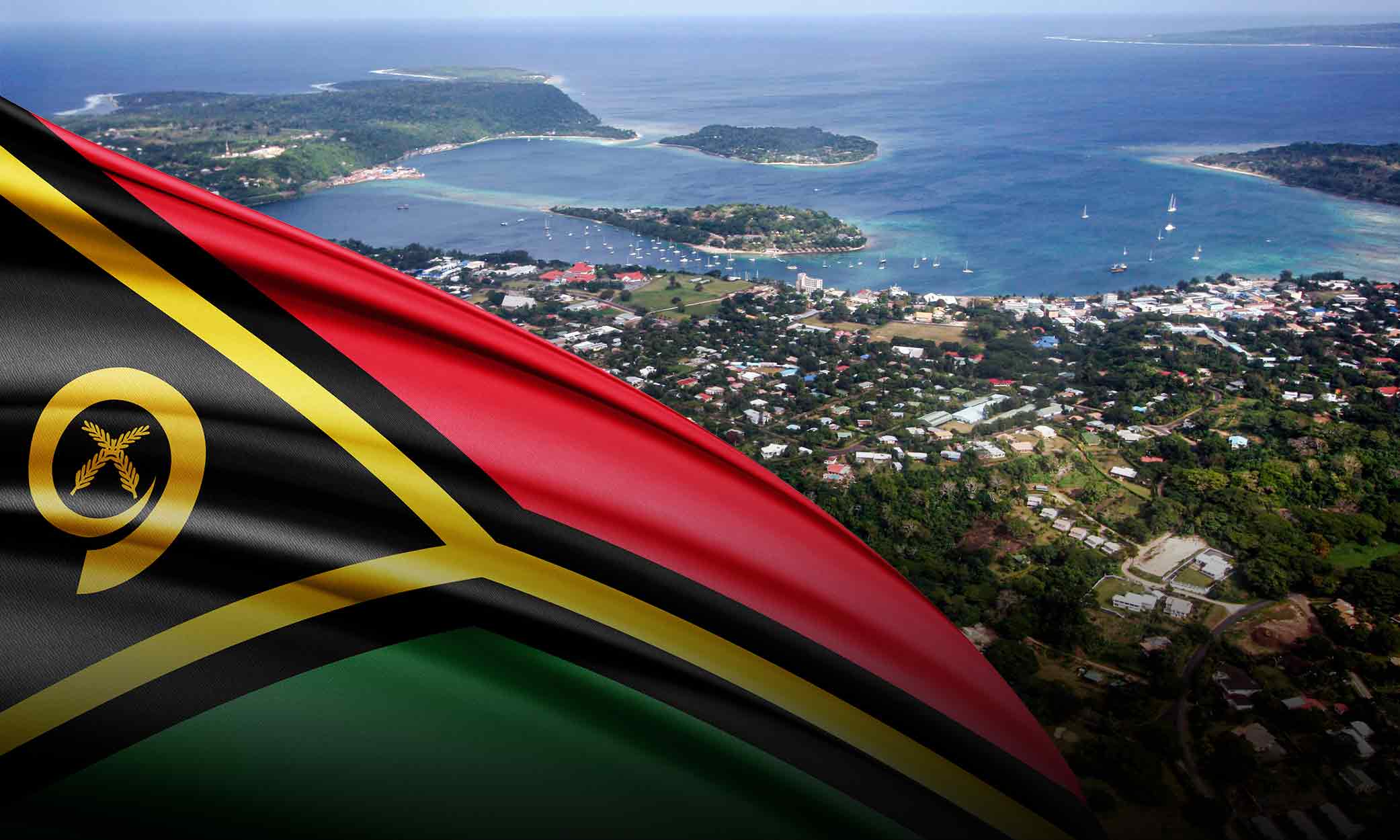
A Dubai-based investor completed Vanuatu's citizenship by investment process in January 2026, paying $130,000 to the Development Support Program. Three months later, he received an invoice for an "annual citizenship tax" — except Vanuatu levies no such tax. The invoice was for a VUV 50,000 registration fee, a common point of confusion that costs applicants clarity and peace of mind.
Vanuatu does not impose a citizenship tax. The country operates as a zero-tax jurisdiction with 0% tax on worldwide income, capital gains, dividends, inheritance, wealth, corporate profits, and export of capital. What applicants pay is a one-time non-refundable investment contribution and modest annual registration fees — neither of which are taxes in the legal or fiscal sense.
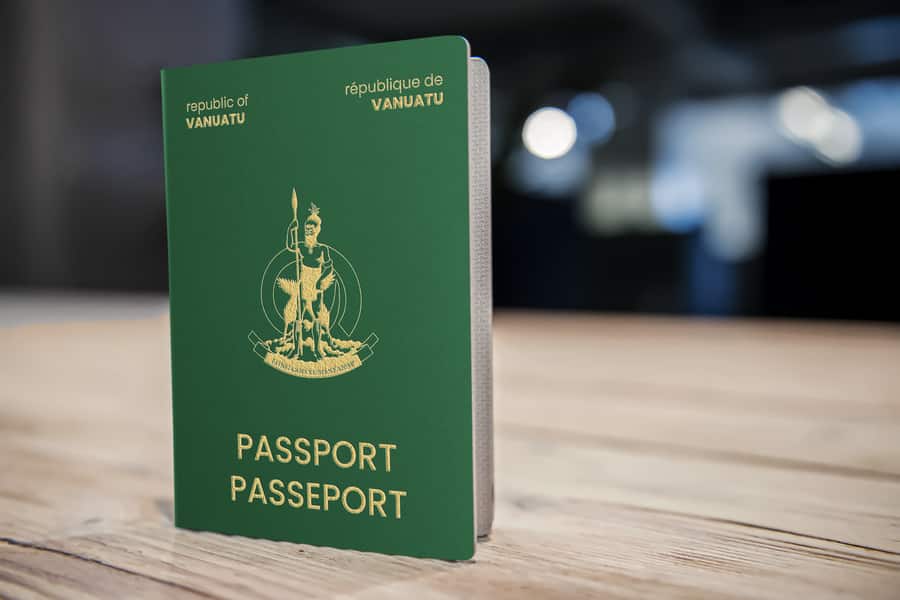
Vanuatu citizenship by investment is a legal program that grants full citizenship and passport rights in exchange for a government donation (typically $130,000 for a single applicant) and completion of due diligence checks, with no residency requirement or taxation on worldwide income.
Key Takeaways
- Vanuatu charges 0% tax on worldwide income, capital gains, dividends, inheritance, and corporate profits as confirmed by the Vanuatu Customs and Inland Revenue Department.
- The minimum citizenship investment is $130,000 to the Vanuatu Development Support Program, a non-refundable contribution, not a tax.
- All-in costs for a single applicant total approximately $145,000–$155,000 when including due diligence fees ($5,500), passport issuance ($2,000–$3,000), and 5% bank commission.
- Annual citizenship registration fees are VUV 50,000 (≈ $450 USD) for the first year and VUV 20,000 (≈ $180 USD) for subsequent years — administrative fees, not taxes.
- The only significant general tax in Vanuatu is a 15% Value Added Tax applied to goods and services at the consumer level.
Does Vanuatu Have a Citizenship Tax?
No citizenship tax exists in Vanuatu. The country's tax structure features 0% rates on personal income, corporate profits, capital gains, dividends, wealth, inheritance, withholding, and export of capital. The Vanuatu Customs and Inland Revenue Department has confirmed this zero-tax framework remains in effect, with no gazetted changes to rates or fees under the governing legislation.
The confusion is understandable. Applicants pay substantial sums to obtain citizenship — but these are investment contributions and registration fees. A tax is compulsory. A citizenship contribution is a one-time donation that qualifies an applicant for naturalization. Legally and fiscally, they differ entirely.
Once you hold Vanuatu citizenship, you pay 0% tax on foreign-earned income, investment returns, stock exchange profits, and capital withdrawals — whether you were born there or naturalized through investment. This structure makes Vanuatu citizenship attractive to entrepreneurs, digital nomads, and investors seeking wealth preservation strategies outside traditional tax jurisdictions. That said, your home country may still tax you on certain types of income or assets depending on your residency status and citizenship claims.
What Is a Zero-Tax Jurisdiction and How Does It Work?
A zero-tax jurisdiction imposes no income tax, corporate tax, capital gains tax, or wealth tax on residents or citizens. Vanuatu funds government operations through import duties, a 15% VAT on domestic consumption, and service fees—not income taxation.
This contrasts sharply with the United States model, which taxes citizens on global income regardless of where they live or earn. Vanuatu does not. Rental income from Europe, stock dividends from Asia, or freelance earnings from North America—all taxed at 0%.
Critical: zero-tax status in Vanuatu does not automatically exempt you from tax obligations to your former country of citizenship. Tax liability depends on your home country's laws and whether you renounce prior citizenship or establish non-residency for tax purposes. Some countries tax on citizenship alone; others tax on residency. Professional tax advice specific to your situation is essential before making this move.

What Are the Actual Costs of Obtaining Vanuatu Citizenship?
The minimum investment is $130,000 for a single applicant through the Vanuatu Development Support Program—a non-refundable government donation required to qualify for naturalization. Processing typically takes 2–3 months.
An alternative is the Cocoa Sustainable Development Fund, which requires $165,000 for a single applicant and directs funds toward agricultural projects. Both routes grant identical citizenship and passport rights; the difference lies in contribution size and fund allocation.
Neither contribution is refundable. If an application is rejected due to failed due diligence or incomplete documents, you may receive partial refunds of certain processing fees—but not the core contribution.
How Much Does the Vanuatu Development Support Program Cost?
Single applicant: $130,000. A married couple pays approximately $150,000; a family of four pays around $180,000. These are base contributions only; due diligence, passport issuance, and processing fees apply separately.
No residency requirement or in-country visit is necessary. The process involves document verification, background checks through the Financial Intelligence Unit, and approval by the Citizenship Commission.
What Is the Cocoa Sustainable Development Fund Route?
The Cocoa Sustainable Development Fund costs $165,000 for a single applicant—$35,000 more than the Development Support Program. This option directs your contribution toward cocoa farming initiatives rather than general government funds.
Processing timelines and eligibility criteria mirror the Development Support Program route. The higher contribution does not expedite approval or grant additional rights. Applicants choose this route based on personal values or specific program availability at the time of application.
What Additional Fees Come with Vanuatu Citizenship by Investment?
Beyond the base contribution, mandatory fees stack quickly. Each adult pays a $5,500 FIU Due Diligence fee for background checks against Interpol databases, international sanctions lists, and criminal records. Non-refundable regardless of outcome.
Passport issuance and citizenship registration run $2,000–$3,000 per applicant. Banks processing the contribution transfer typically charge 5% commission, adding $6,500–$8,250 to a single applicant's total.
All-in for one person: approximately $145,000–$155,000.
| Fee Component | Amount (USD) | Refundable? |
|---|---|---|
| Development Support Program contribution | $130,000 | No |
| FIU Due Diligence fee (per adult) | $5,500 | No |
| Passport issuance and registration | $2,000–$3,000 | No |
| Bank commission (5%) | $6,500–$8,250 | No |
| Total estimated cost | $144,000–$146,750 | — |
Takeaway: Expect to pay close to $145,000 total when all fees and commissions are included. Per-person costs decrease with larger family applications.
What Is the FIU Due Diligence Process?
The Financial Intelligence Unit conducts background checks on all adult applicants to verify identity, confirm no criminal history, and ensure compliance with international anti-money laundering standards. Checks include Interpol databases, Interpol Red Notice registries, United Nations sanctions lists, and national criminal records in countries where you've lived.
Document verification covers passports, birth certificates, police clearance certificates, bank reference letters, and source-of-funds documentation. The FIU may request additional materials if initial submissions raise flags. Processing time is included in the 2–3 month overall timeline, though incomplete documents extend this period.
Are There Ongoing Annual Fees for Vanuatu Citizens?
Yes. Annual citizenship registration fees are VUV 50,000 (approximately $450 USD) for the first year, included in your initial application. For subsequent years, the fee drops to VUV 20,000 (approximately $180 USD) and must be paid before your citizenship anniversary.
These are administrative registration fees, not taxes on citizenship. They maintain your entry in the national registry, update records, and issue replacement documents. Failure to pay can result in citizenship suspension or passport renewal refusal.
Payment procedures vary. Most citizens pay through authorized agents or legal representatives who manage renewals. The government does not send invoices directly to individual citizens—tracking deadlines is your responsibility or that of your appointed agent.
How Do Annual Citizenship Registration Fees Differ from Taxes?
Registration fees are flat-rate charges for maintaining legal status. Same amount for every citizen regardless of income, wealth, or financial activity. Taxes are variable levies based on income earned, assets held, or transactions completed—they scale with economic activity.
Vanuatu's VUV 20,000 annual fee is a fixed administrative charge—it never changes regardless of income, wealth, or transaction volume. A billionaire pays the same $180 as someone with modest assets. This distinction matters: registration fees are administrative overhead; taxes scale with economic activity.
Other citizenship by investment programs tell a different story. Malta charges no annual citizenship fee but imposes income tax on residents. Cyprus follows a similar pattern. Caribbean programs like St. Kitts and Dominica—they charge no annual fee and impose 0% income tax, matching Vanuatu's model.
What Taxes Do Vanuatu Citizens Actually Pay?
Vanuatu citizens encounter one major tax: a 15% Value Added Tax on most goods and services purchased within the country. It's a consumption tax applied at the point of sale, similar to a sales tax in the US. The 15% rate applies to imported goods, retail purchases, restaurant meals, hotel stays, and professional services. VAT generates the largest share of government revenue.
Certain purchases escape VAT entirely. Basic food items, medical services, educational services, and financial services are exempt. If you export goods or services outside Vanuatu, those transactions are zero-rated for VAT purposes—your business doesn't charge VAT on cross-border sales.
Import duties and excise taxes (on alcohol and tobacco) round out the picture. These are transaction-based charges, not recurring obligations. Property tax? Zero. Stamp duty on real estate transfers? Zero. Estate tax on inherited assets? Zero.
How Does Vanuatu's 15% VAT Work?
Businesses register with the Vanuatu Customs and Inland Revenue Department, collect 15% VAT on sales, and remit collected amounts quarterly. Consumers see VAT included in listed prices—no surprise checkout additions. This differs from some countries where VAT is added at the register.
VAT-exempt categories cover unprocessed food (fruits, vegetables, grains), prescription medicines, public education, and banking transactions. A business selling only exempt goods doesn't need to register for VAT. Those selling both taxable and exempt goods must register and track categories separately—the compliance burden is modest but real.
Compared to income tax systems, VAT asks less of you personally. You pay it when you buy something; you file no annual returns, report no foreign income, disclose no assets. That privacy appeal drives some citizenship decisions.
Does Vanuatu Tax Worldwide Income for Its Citizens?
No. Salary, business income, rental income, dividends, interest, capital gains—Vanuatu taxes none of it, regardless of where you earned it or where you live. This applies equally to citizens residing in Vanuatu and those abroad.
Foreign investment returns remain tax-free. Dividend-paying stocks, rental properties generating income, business interests distributing profits—none face Vanuatu taxation. The country doesn't require income tax returns or reporting of foreign bank accounts. Consider the practical implication: if you earn $500,000 annually from US real estate rentals while holding Vanuatu citizenship, zero of that is taxable to Vanuatu. Your home country may have different ideas, but Vanuatu doesn't.
That said, other countries' reporting rules still apply. US citizens file annual returns everywhere they live. EU residents may face tax residency declarations if they spend significant time abroad. Vanuatu citizenship solves Vanuatu's tax burden; it doesn't override obligations elsewhere.
"Vanuatu's 0% tax on worldwide income means citizens pay no tax on foreign-earned income, dividends, capital gains, or business profits — confirmed by the Vanuatu Customs and Inland Revenue Department with no changes gazetted under current legislation."
How Does Vanuatu's Tax Structure Compare to Other Citizenship by Investment Programs?
Vanuatu ranks among the most tax-favorable citizenship by investment options globally. Cyprus and Malta impose income tax on tax residents at rates reaching 35%. Caribbean programs—St. Kitts, Dominica, Antigua and Barbuda—match Vanuatu's 0% income tax structure.
Investment minimums tell a cost story. St. Kitts demands $250,000 for real estate or a donation. Dominica requires $200,000 for a single applicant. Antigua wants $230,000. Vanuatu's $130,000 undercuts them all. Yet all Caribbean programs offer identical tax treatment: 0% on worldwide income.
Residency requirements create practical differences. Cyprus and Malta demand physical residency before and after approval—a non-starter for those unwilling to relocate. Vanuatu has no residency requirement at any stage. Apply, pay, pass due diligence, receive citizenship. You never set foot in the country.
| Program | Minimum Investment | Income Tax Rate | Residency Required? | Processing Time |
|---|---|---|---|---|
| Vanuatu | $130,000 | 0% | No | 2-3 months |
| St. Kitts and Nevis | $250,000 | 0% | No | 4-6 months |
| Dominica | $200,000 | 0% | No | 3-4 months |
| Antigua and Barbuda | $230,000 | 0% | 5 days in 5 years | 3-4 months |
| Cyprus | €2,000,000 | Up to 35% | Yes (extensive) | 6+ months |
| Malta | €600,000+ | Up to 35% | Yes (12-36 months) | 12-36 months |
Bottom line: Vanuatu offers the lowest entry point among zero-tax programs, fastest processing, and zero residency burden. For applicants prioritizing cost and speed over EU membership or Schengen visa access, Vanuatu is the most practical choice.
Which Other Citizenship Programs Offer Zero-Tax Status?
St. Kitts and Nevis, Dominica, Antigua and Barbuda, and Grenada all operate citizenship by investment with 0% income tax on worldwide income. These Caribbean jurisdictions share a common principle: foreign-earned income, capital gains, dividends, and inheritance face no taxation. Citizens pay consumption taxes and import duties within the country—that's it.
Tax residency rules differ from citizenship tax rules, and this gap matters. Portugal's Golden Visa, for example, leads to citizenship but triggers tax residency if you spend significant time there—suddenly you owe income tax. Vanuatu doesn't work that way. Citizenship never activates tax residency or income tax liability, even if you live there full-time.
Privacy considerations influence some decisions. Vanuatu isn't yet a Common Reporting Standard (CRS) participant—though it has committed to joining. Until implementation, Vanuatu doesn't automatically share financial account information with other tax authorities. That privacy layer appeals to wealth-preservation strategies, though it's temporary.

This article is published by an independent law firm for informational purposes only and does not represent or claim affiliation with any government body, international organization, or official authority.
Frequently Asked Questions About Vanuatu Citizenship Tax and Costs
Is There a Citizenship Tax in Vanuatu?
No. Vanuatu levies no tax on citizenship itself. The country operates as a zero-tax jurisdiction: 0% on income, capital gains, dividends, inheritance, corporate profits. The only recurring charge is an annual citizenship registration fee of VUV 20,000 (roughly $180 USD)—administrative overhead, not a tax.
What Is the Difference Between Investment Contribution and Tax?
An investment contribution is a one-time, non-refundable payment required to qualify for citizenship. Vanuatu's is $130,000 for a single applicant. Taxes recur and scale with economic activity—they rise as income rises. Vanuatu's citizenship contribution happens once; taxes, if they existed, would be ongoing and variable. Vanuatu charges no income tax, so the boundary is clear.
Can I Get a Refund on My Vanuatu Citizenship Investment?
No. All contributions to the Vanuatu Development Support Program and Cocoa Sustainable Development Fund are explicitly non-refundable. If an application fails due diligence or incomplete paperwork, you may recover partial processing fees, but the core contribution stays with the government.
Do I Need to Pay Taxes to My Home Country After Getting Vanuatu Citizenship?
That's determined by your home country, not Vanuatu. The United States taxes citizens on worldwide income regardless of where they live or how many passports they hold. Most European countries tax based on residency, not citizenship. Vanuatu citizenship doesn't automatically exempt you from home-country taxes unless you renounce prior citizenship or establish non-residency status.
How Much Does Vanuatu Citizenship Cost in Total for a Single Applicant?
Expect $145,000–$155,000 total. This includes the $130,000 Development Support Program contribution, $5,500 FIU Due Diligence fee, $2,000–$3,000 for passport and registration, and a 5% bank commission ($6,500–$8,250). The first-year annual citizenship registration fee of VUV 50,000 (≈ $450 USD) typically gets bundled into initial processing costs.
Does Vanuatu Tax Worldwide Income for Citizens?
No. Vanuatu imposes 0% tax on worldwide income for all citizens. Salary, business income, rental income, dividends, interest, capital gains, investment returns—all tax-free. The country doesn't require income tax returns or foreign bank account reporting. Your primary tax obligation in Vanuatu is the 15% Value Added Tax on goods and services purchased locally.
What Are the Annual Costs of Maintaining Vanuatu Citizenship?
Once approved, you'll pay VUV 20,000 (roughly $180 USD) each year to keep your citizenship active—a registration fee that covers your spot in the national registry. Your first year costs more: VUV 50,000 (about $450 USD). The good news is these fees don't scale with your wealth or income, so a millionaire and a modest earner pay identical amounts. Passport renewal happens once per decade and runs $300–$500 separately, so don't budget that as an annual expense.